
2024
Helping active people find their people
A fitness companion app that connects users to local sports clubs, teams, and dance studios — with schedules, availability, and contact info in one search instead of a dozen scattered sites.
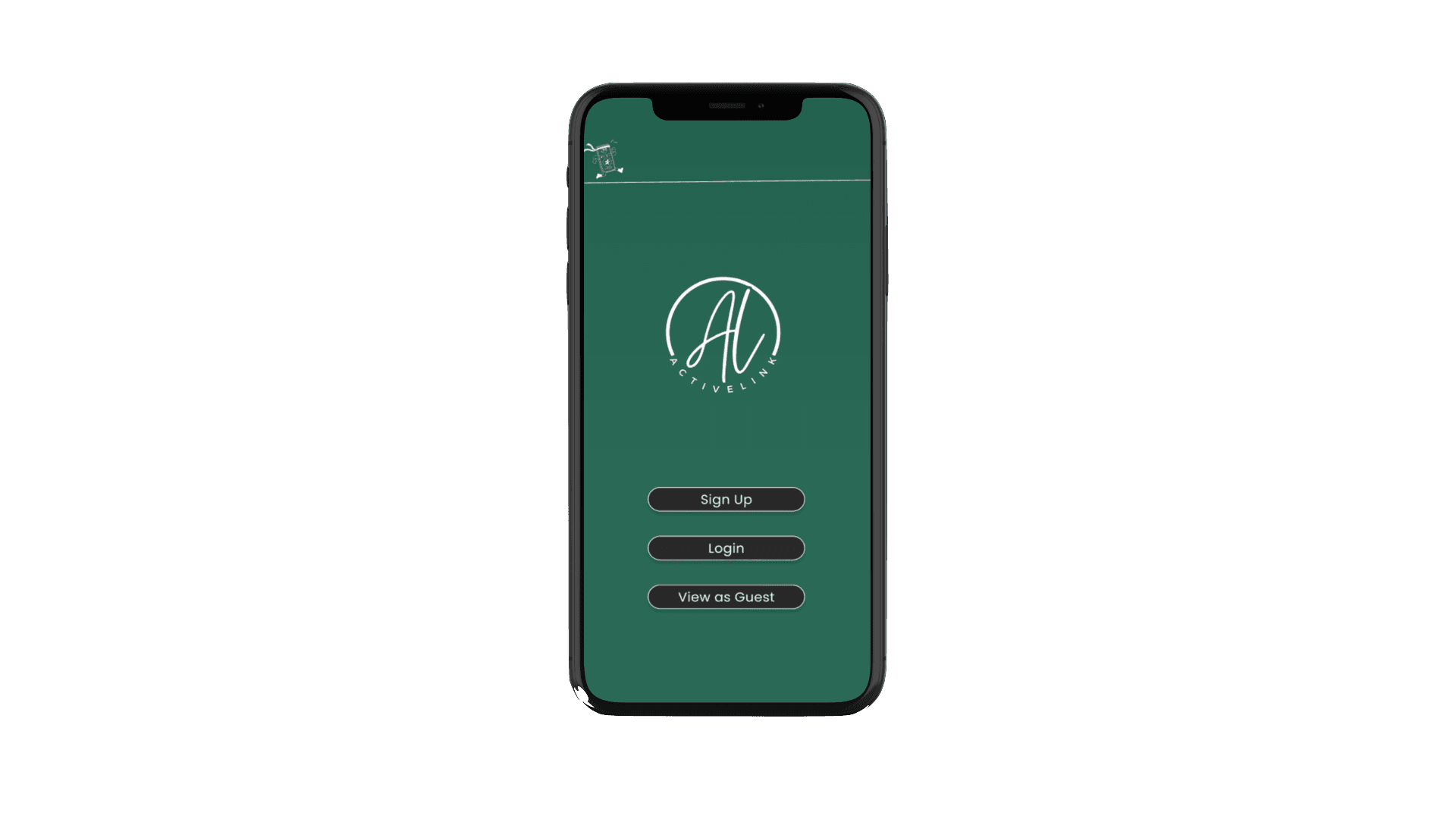
Click the phone to try the live prototype →
Role
Product Designer
Timeline
July 2025
Team
3 Designers
Platform
Web application
Overview
Making it easier to stay active
ActiveLink is a fitness companion app built for people who want to stay active without the hassle of finding where to go. It connects users to local sports clubs, teams, and dance studios in one place — with schedules, availability, and contact details all in one search.
I worked on this as part of a 4-person team, covering the business model, user experience, and product design from idea to working prototype. The project placed 2nd in our program's business pitch competition.
The Impact
The redesign focused on removing the friction of discovering and booking activities — turning a scattered, multi-app search into a single guided flow from search to booking.
Problem
Finding a place to play shouldn't be the hard part
ActiveLink is a fitness companion app built for people who want to stay active without the hassle of finding where to go. It connects users to local sports clubs, teams, and dance studios in one place — with schedules, availability, and contact details all in one search.
I worked on this as part of a 4-person team, covering the business model, user experience, and product design from idea to working prototype. The project placed 2nd in our program's business pitch competition.
01 - No Central Discovery, 02 - Outdated schedules, 03 - Manual booking friction
Research
Building the business case alongside the user need
Before jumping into screens, we mapped the entire business around the problem using a Business Model Canvas - partly to validate the idea, partly to understand who we were actually designing for.
What we learnt
Our audience was wider than we assumed: individuals across every age group, sports and dance organizations needing an easier way to manage schedules, and nonprofits like the YMCA looking to promote community programs.
—— Research participant
"I just want to know what's happening near me this week — I shouldn't need three apps and
a group chat to find a pickup game."
Ideation
Choosing what actually earns its place
With the problem and audience defined, we broke the solution into core activities: activity discovery, scheduling tools, local business partnerships, and always-on support.
Activity discovery
Partner listings
24/7 support
Scheduling & maps
Designs
A guided path from search to booking
The final prototype focused on a clean, guided flow: enter as a guest, search, filter, and book — all in just a few taps.

Search and filter by sport or dance, category, and skill level.

Home screen with quick access to shop, activities, favourites, and bookings.

Confirmation once a
spot is secured.
A simple checkout showing the subtotal and total before booking.


Matching results are shown with live location context on the map.
Outcome
Designing for clarity earned trust faster than more features
The final deliverable combined a validated business model with a working, testable prototype — and the pitch earned 2nd place in our class competition. Beyond the placement, this project taught me how to translate a business idea into something tangible and usable.